Summer Crowds, Military Traffic, and Rising Crash Risks
Summer around Camp Lejeune brings heavy traffic from every direction. Families head to beaches like Topsail and Emerald Isle, locals run errands, and military members move between base and home. All of this meets on the same highways and back roads, which means more chances for serious wrecks.
Highway 24, US 17, and the main roads around Jacksonville often fill with a mix of out-of-state drivers, rental cars, military convoys, and commercial trucks. Drivers may be tired from long trips, distracted by beach plans, or unsure of where they are going. When you mix that with busy base traffic, one quick mistake can lead to a crash.
If you are hurt in a wreck in the Jacksonville or Camp Lejeune area, it helps to understand your rights. North Carolina law can be tough on injured people, and insurance companies know that. Talking with a Jacksonville, NC car accident lawyer early can help you protect yourself and your family.
Common Summer Crash Scenarios Near Camp Lejeune
The roads around Camp Lejeune see certain types of crashes over and over in the summer months. Knowing how they happen can help you spot risk and understand what might have gone wrong in your own wreck.
Tourist-related collisions often involve:
- Drivers focused on GPS instead of the road
- Sudden lane changes to avoid missing a beach or hotel exit
- Last-second braking when a turn or base gate appears
- Confusion about local traffic patterns or multiple turn lanes
These problems can cause rear-end crashes, T-bone impacts at intersections, and sideswipes on crowded stretches of highway.
Military and commuter traffic creates its own dangers. Early mornings and late afternoons can be packed around base gates, with:
- Service members and civilian workers rushing to make formation or shifts
- Fatigue from long duty days, training, or deployments
- Drivers splitting attention between work calls, family needs, and vacation plans
Even a small distraction or a few miles per hour over the limit can matter when traffic is heavy.
Seasonal dangers also play a big role in summer:
- Speeding on coastal routes heading to or from the beach
- Drunk or drugged driving after cookouts, bars, or late-night outings
- Motorcycle wrecks when drivers fail to look twice before changing lanes
- Pedestrian crashes near hotels, Airbnb rentals, crosswalks, and attractions
Weekends and holidays can see the worst mix of all these issues, especially when people stay out late or try to beat traffic home.
What to Do Immediately After a Tourist-Area Crash
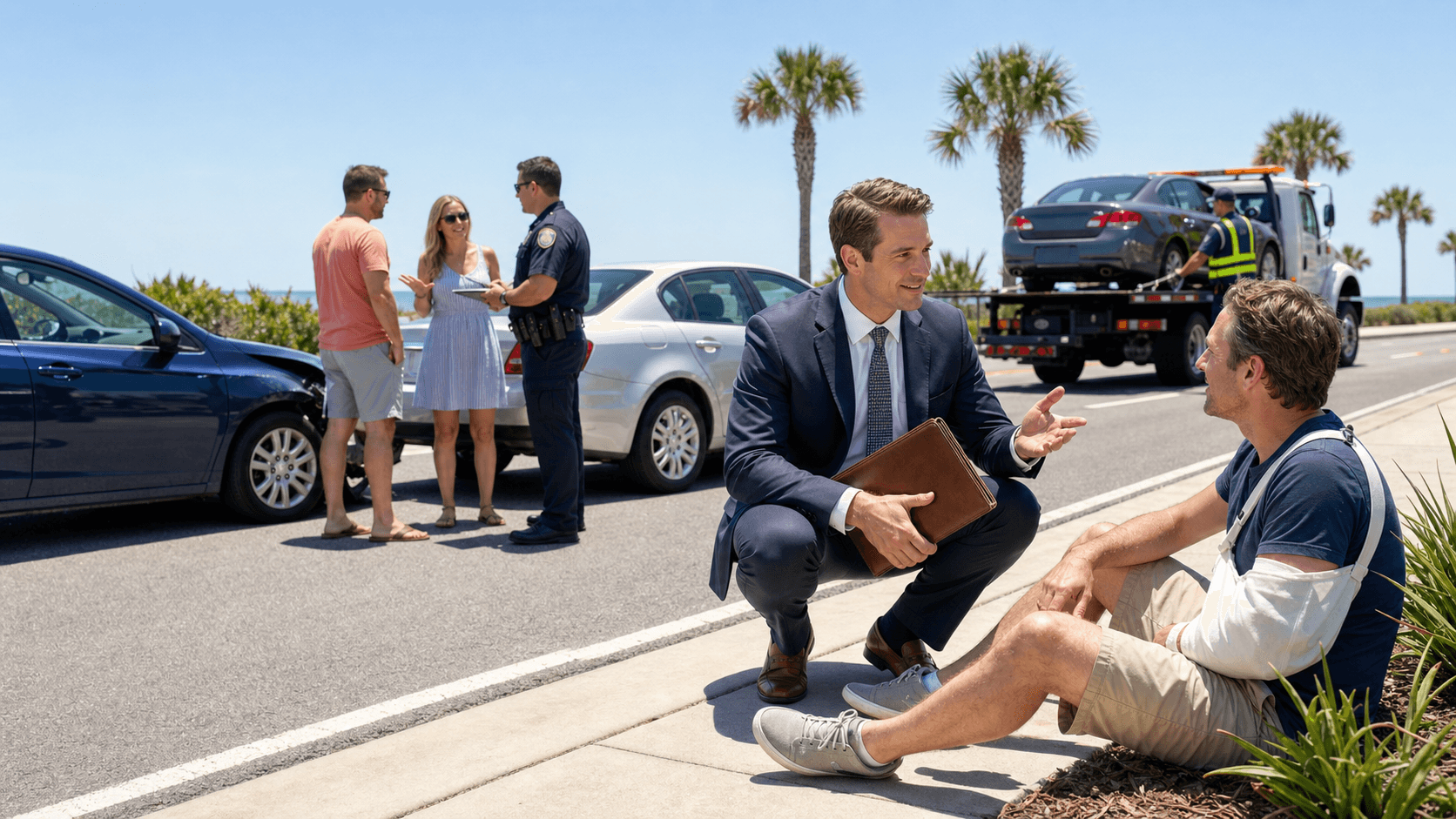
Right after a crash near Camp Lejeune, things can feel confusing and fast. A few clear steps can help protect your health and your legal rights.
First, focus on safety and documentation:
- Move vehicles out of traffic if you can do so safely
- Call 911 and ask for law enforcement and medical help
- Cooperate with officers from Jacksonville Police, Onslow County Sheriff, or NC Highway Patrol
- Take photos of the scene, the vehicles, road markings, and any visible injuries
- Get names, phone numbers, and insurance details from all drivers, including any rental car information
- Ask witnesses for their contact information before they leave
Even if you feel "okay," a medical evaluation matters. Some injuries show up later, including:
- Whiplash and neck or back pain
- Concussions and other head injuries
- Internal injuries or soft tissue damage
Seeing a doctor creates a clear record of your injuries and how they started. Those medical records often become key pieces of evidence in a claim.
As for insurance and legal steps, try to stay calm and cautious. You can:
- Report the crash to your own insurance company, but keep it brief and factual
- Avoid giving a recorded statement to the other driver's insurer
- Decline quick settlement offers before you know the full extent of your injuries
If you are from out of state or are active-duty military, dealing with different laws and insurance can get even more confusing. Speaking with a Jacksonville, NC car accident lawyer early can help keep you from saying or signing something that harms your claim.
Understanding Your Legal Rights After a Summer Crash
North Carolina follows a strict rule called contributory negligence. This means an insurance company can try to deny your claim if it says you were even a tiny bit at fault for the crash. For example, they may argue that you were going slightly over the speed limit, changed lanes too quickly, or glanced at your phone.
This rule gives insurers a reason to dig for any small detail they can use against you. Many injured people do not realize how something they say in a casual phone call can later be twisted and used to blame them.
Some wrecks near Camp Lejeune involve more than one potentially responsible party, such as:
- Negligent drivers in personal vehicles
- Rental car companies and their insurance policies
- Rideshare drivers and related coverage
- Commercial trucks or delivery vehicles
- Drunk drivers who were overserved by a bar or restaurant
In these situations, fault and insurance coverage may be shared. Sorting that out often takes careful review of the facts and the available policies.
Local evidence can be very important, especially in a tourist-heavy area. Helpful evidence may include:
- Dashcam footage from your vehicle or others nearby
- Base gate logs showing traffic patterns or timing
- Phone records that may show distraction
- Surveillance video from gas stations, stores, or hotels
North Carolina also has deadlines for filing personal injury claims. Waiting too long can cause evidence to disappear and can even keep you from bringing a claim at all. Quick action often gives you a stronger chance to tell your side of the story.
Why a Local Jacksonville, NC Car Accident Lawyer Matters
Working with a local Jacksonville, NC car accident lawyer can make a real difference after a wreck near Camp Lejeune. A local team knows:
- Where serious crashes tend to happen around base and beach routes
- How local officers usually investigate and report wrecks
- How insurers that handle Eastern North Carolina claims often respond
That local knowledge helps when reviewing crash reports, speaking with witnesses, and building a clear picture of what really happened.
There are also special concerns for military members, their families, and out-of-state visitors. These can include:
- Questions about where a claim should be filed
- Coordinating treatment and bills with TRICARE or other health insurance
- Handling a case when you must return to another state or duty station
A local firm can help keep your case moving while you focus on your health, your family, and your military or civilian job.
Dealing with insurers on your own can feel one-sided. An experienced local attorney can:
- Communicate with adjusters so you do not have to manage every call
- Gather medical records and work information to understand lost income
- Work to calculate damages like medical expenses, future treatment needs, lost wages, and pain and suffering
- Prepare to negotiate firmly, and when needed, to take a case to court
Protect Your Summer and Your Future After a Crash
A summer crash near Camp Lejeune, Jacksonville, Wilmington, or Fayetteville can turn a fun season into months of stress, treatment, and lost time from work. Quick, smart steps can help protect both your immediate needs and your long-term future.
At King Law Firm, we focus on helping injured people across Eastern North Carolina in car, truck, motorcycle, workplace, disability, medical malpractice, and wrongful death cases. If you have been hurt in a summer wreck around Camp Lejeune, you do not have to handle insurance companies, paperwork, and legal rules on your own while you are trying to heal.
Protect Your Rights And Start Your Claim Today
If you were injured in a crash, our team at King Law Firm is ready to step in, answer your questions, and handle the insurance company for you. Talk with an experienced Jacksonville, NC car accident lawyer so you understand your options before you sign anything or accept a settlement. We will review your case, explain what to expect, and outline a strategy tailored to your situation. To schedule a free consultation, simply contact us today.