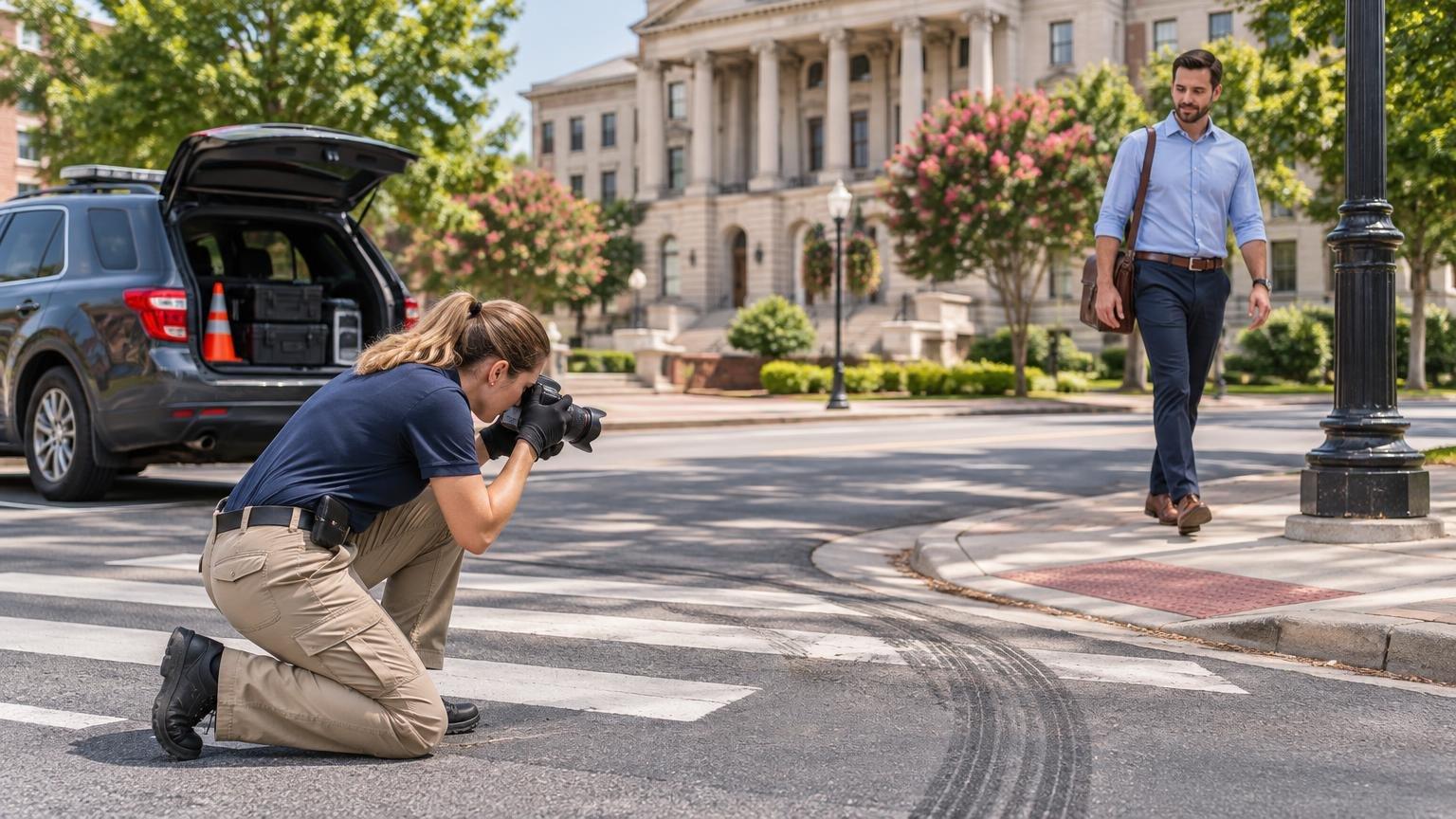
Protecting Crosswalk Evidence Before It Disappears
Evidence after a Fayetteville pedestrian crash can change faster than most people expect. Camera footage may be overwritten, skid marks may fade, rain can change the roadway, and witnesses can forget small but important details. Even when a person was struck while crossing the street, the facts are not always as clear as they first seem.
At King Law Firm, we know that early evidence can shape how an insurance company views a claim. A pedestrian accident lawyer in Fayetteville, NC can help identify and preserve information involving traffic signals, roadway markings, video, witness accounts, driver behavior, and medical care before key records disappear.
Fall crashes can raise extra visibility questions. Shorter daylight hours, wet roads, leaves near curbs, and heavier evening traffic around Thanksgiving may affect what a driver could see and how quickly a vehicle could stop.
Reading the Roadway Features That Shape Liability
The exact place where the collision happened matters. A marked crosswalk, an unmarked crosswalk at an intersection, a midblock crossing area, and a roadway without pedestrian markings can each lead to different questions about right-of-way and reasonable care.
We look closely at the full setting, not just the point of impact. Details that may help explain what happened include:
- Crosswalk paint, curb ramps, and lane markings
- Stop signs, yield signs, turn arrows, and traffic lights
- Walk and don't walk signals
- The pedestrian's direction of travel
- The driver's intended path, including a turn across the crosswalk
Signals and signs can create an important timeline. A pedestrian signal may show one message while a driver has a green light or a protected turn arrow. Signal timing records, maintenance information, and video may help clarify the sequence of events. Those details can matter when determining whether a driver had a duty to yield or whether a pedestrian entered the roadway under a particular signal.
Road conditions also deserve attention. Poor lighting, parked vehicles, construction barriers, faded paint, standing water, overgrown vegetation, or blocked signs may affect visibility. Photos taken near the same time of day can be especially helpful during Fayetteville's darker fall and early winter evenings. A roadway issue does not automatically establish fault, but it may provide important context for the driver's conduct.
Preserving Video and Digital Crash Records
Nearby cameras may have recorded the collision or the moments leading up to it. Businesses, homes, parking lots, school areas, public transit vehicles, traffic cameras, and other vehicles may hold useful footage. Many recording systems save video for only a limited time, so documenting camera locations quickly can make a real difference.
Photos can also show details a police report may not capture. We recommend keeping original image files whenever possible because timestamps and location information may help establish when and where the images were taken. Useful images may show:
- Crosswalk lines, signals, signs, and curb ramps
- Vehicle damage, debris, and tire marks
- Weather, road surface conditions, and lighting
- Sightlines blocked by vehicles, trees, or construction
- Clothing, shoes, or personal items involved in the crash
Official and electronic records can fill other gaps. Depending on the circumstances, police reports, 911 recordings, dispatch logs, crash reconstruction materials, vehicle event data, and legally available phone records may help confirm speed, braking, traffic conditions, distraction, or conflicting versions of events. We can pursue available records through appropriate channels and send preservation notices when evidence may be at risk.
Showing How Driver Conduct Caused the Crash
Speed, late braking, a wide turn, failure to look toward a crosswalk, or failure to yield during a turn can all contribute to a pedestrian collision. Vehicle damage, skid marks, video, witness statements, and available crash data may help show whether the driver had time and distance to avoid the impact.
Initial impressions are not always reliable. A driver may say they never saw the pedestrian, while a witness may remember that the driver was looking down or turning quickly. Investigators may compare phone activity, officer notes, witness observations, and video footage to examine possible distraction, impairment, fatigue, aggressive driving, or inattention.
Conflicting statements should be handled with care. A crash is traumatic, and people often remember events differently afterward. In North Carolina, claims of pedestrian fault can carry serious consequences because the state follows contributory negligence rules. We encourage you to write down your own recollection while it is fresh, avoid guessing about facts you do not know, and understand your rights before accepting an insurer's version of what happened.
Linking Injuries and Losses to the Collision
Medical records help create a treatment timeline. Emergency care, imaging, follow-up appointments, therapy, prescriptions, and specialist recommendations can show both the nature of an injury and how it develops over time. Pedestrian crashes may lead to fractures, head injuries, spinal injuries, soft-tissue damage, internal injuries, and emotional trauma that need continued evaluation.
The full impact of an injury is not always visible in a medical bill. Pain, reduced mobility, sleep problems, missed family events, transportation needs, and help with routine tasks can affect daily life long after the crash. Personal notes, calendar entries, and observations from family members may help document those changes.
Financial losses also need support. Wage statements, employer letters, tax records, receipts, medical bills, insurance explanations of benefits, and information about expected future care may all be relevant. We help injured North Carolinians organize these records and assess whether an offer addresses present losses as well as future needs.
Move Quickly to Protect Your Fall Injury Claim
Crosswalk evidence is often time-sensitive, especially during the fall holiday season when earlier darkness, changing weather, and heavier traffic can make crash investigations harder. Save photos and paperwork, keep medical appointments, and avoid posting detailed discussions of the collision online. It is also wise to understand your rights before giving a recorded statement to an insurer.
Prompt action can help preserve the facts that may otherwise be lost. Careful documentation of the scene, your injuries, your treatment, and the ways the crash has changed your daily life can provide a clearer picture of what happened and what recovery may require.
Get Clear Guidance for Your Next Steps
At King Law Firm, we can help you understand how available evidence may affect your claim and what options may be available. Speak with a pedestrian accident lawyer in Fayetteville, NC about your situation and the support you may need moving forward. To discuss your case with our team, contact us today.