Seasonal Hazards Jacksonville Shoppers Can't Ignore
Slip and fall accidents are not just random bad luck. In Jacksonville and across Eastern North Carolina, changing seasons quietly change the risks around stores, shopping centers, and parking lots. Late summer heat, sudden storms, and the first signs of fall can all turn a quick shopping trip into a serious injury.
We see how easily this can happen. A shopper heads to a store on a hot August afternoon. The sky looks clear, but a fast storm rolls in, and the lot gets slick, the aisles get crowded, and one hidden hazard is all it takes. These falls can lead to broken bones, back injuries, head injuries, missed work, and long-term pain.
In our personal injury practice, we understand that these incidents are often tied to local weather patterns, store layouts, and how property owners and their insurers handle maintenance and safety. A slip and fall lawyer in Jacksonville, NC will look closely at those details to see if the business failed to act reasonably.
Below, we walk through seasonal dangers many shoppers overlook, how stores may be negligent, what steps to take after a fall, and when it makes sense to get legal guidance.
Late Summer Rain, Slick Surfaces, and Parking Lot Traps
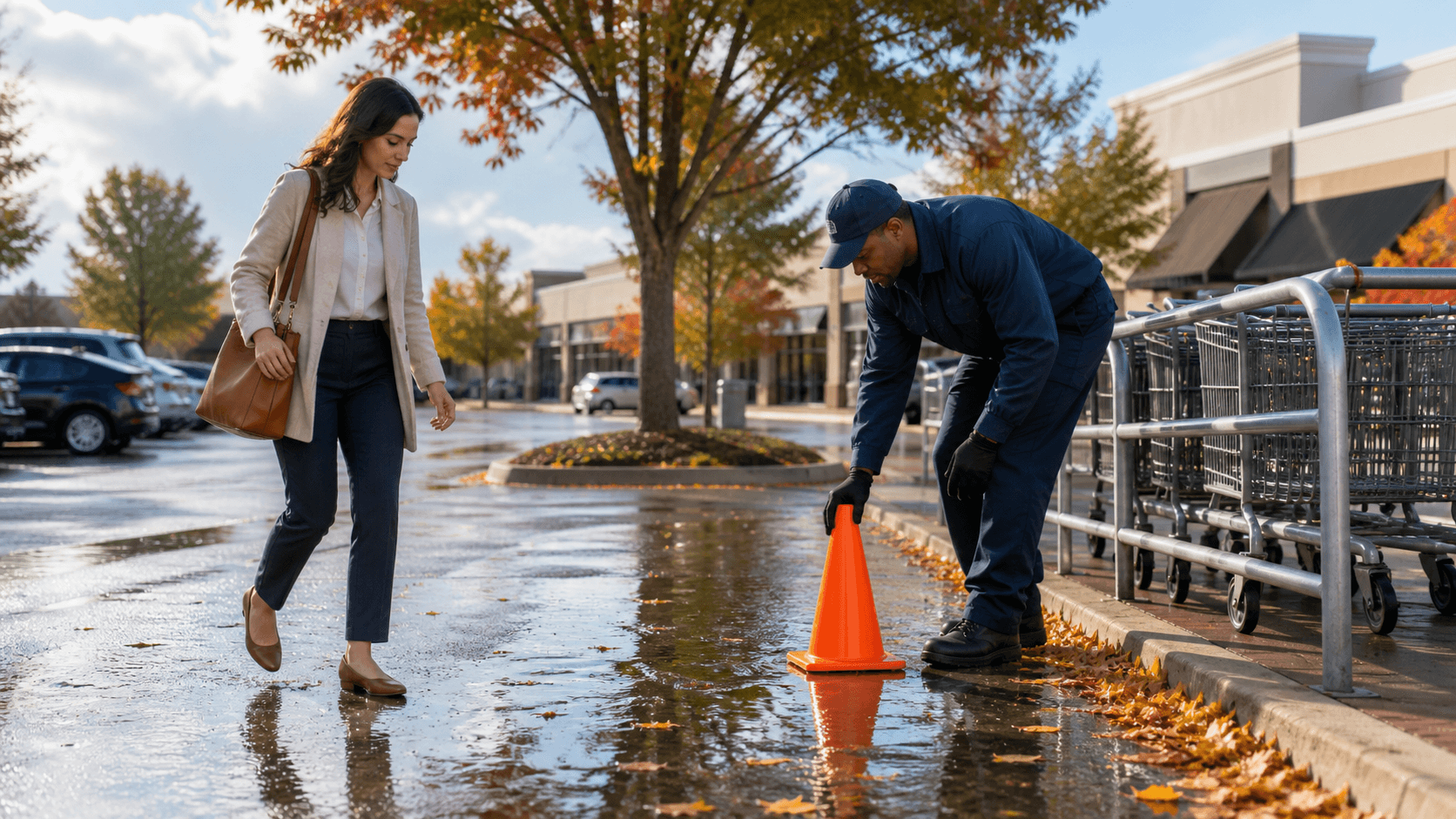
Afternoon thunderstorms and fast showers are common in late summer here. A clear sky can turn dark in minutes, and heavy rain can soak a parking lot before staff has time to react.
These conditions often create:
- Standing water around curbs and speed bumps
- Oil and grease mixing with rainwater and forming thin, slick films
- Poor drainage near store entrances, loading areas, and cart corrals
Property owners should pay attention to local forecasts, check parking lots during and after storms, and clear or mark areas that are especially slick.
Heat and heavy traffic also wear down parking lots. Faded paint on crosswalks and parking lines makes it harder to see:
- Potholes and broken asphalt
- Cracked pavement and uneven slabs
- Missing or broken wheel stops and curbs
When these defects are not repaired or clearly marked within a reasonable time, they can cause hard falls, twisted ankles, or worse. It is on the property owner to inspect, maintain, and warn shoppers about known dangers.
As summer edges toward fall, days get a bit shorter. Evening shopping trips mean more people walking through lots with limited light. Burned-out bulbs, dark corners, or poorly placed lights can hide:
- Puddles and wet spots
- Loose gravel, debris, or trash
- Sudden changes in elevation, like dips or raised edges
A slip and fall lawyer in Jacksonville, NC may look for photos, maintenance logs, and surveillance video to show how long a lighting or pavement hazard was there and whether the owner ignored it.
Inside Stores: Seasonal Spills and Overlooked Messes
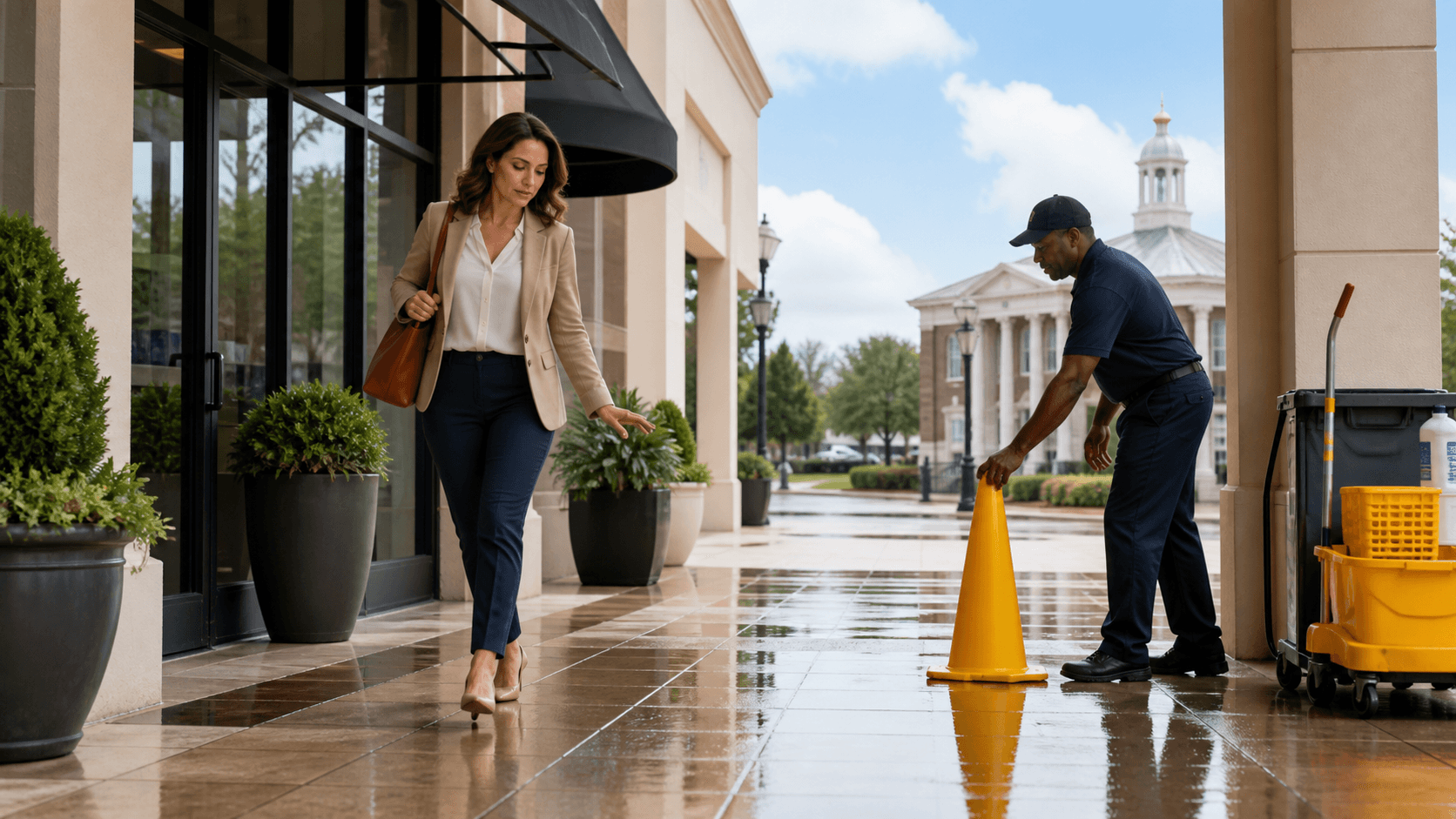
The danger does not stop at the curb. When heavy rain hits, water comes through the doors with every customer and cart. Entryways can quickly turn into slick, polished tile traps.
Common problems include:
- Soaked or missing entry mats
- Mats that curl at the edges and catch feet
- Floors that are wet with no warning signs posted
Stores should place proper mats, change them when they are saturated, use clear "Wet Floor" signs, and mop and dry entry areas regularly during rainy periods.
Late summer also brings back-to-school crowds. Stores may stack shelves high, set up temporary displays, and move stock quickly. That rush can lead to:
- Boxes and packaging left in aisles
- Stock carts and pallets parked in walkways
- Loose items like binders, pens, or plastic wrapping on the floor
Retailers have a duty to keep pathways reasonably clear and to provide safe routes to high-traffic sections, like school supplies, groceries, or home goods.
Food and drink areas bring their own dangers all year, but they get worse when stores are busy. High-risk spots often include:
- Grocery aisles and produce sections
- Deli counters and meat sections
- Freezer aisles and drink coolers
- Self-checkout lanes where people handle their own drinks and bags
Condensation from freezers, leaking coolers, dripping ice bags, and dropped drinks can create repeat slick spots. Stores should have regular inspection routines, quick clean-up procedures, and a way to report and document spills. When they do not act within a reasonable time, that can be negligence.
Fall Leaves, Hurricane Season, and Hidden Outdoor Dangers
As summer turns toward fall, leaves and other natural debris start to collect outside. During storms, early-fall leaves, pine needles, and mulch can wash onto sidewalks, steps, and access ramps.
When this debris gets wet, it becomes slick and can hide:
- Cracks in the pavement
- Holes or dips
- Uneven concrete or loose bricks
Property owners should regularly clear walkways and stairs, especially near store entrances and where people push carts or carry bags.
Late summer also lines up with the heart of hurricane season for our coast. Heavy winds and strong rain can:
- Flood sidewalks and entryways
- Push branches, trash, and loose items into walking paths
- Damage handrails, steps, and ramps
After any serious storm, businesses should inspect their property before letting customers back in, rope off unsafe areas, and make repairs instead of hoping no one gets hurt.
Accessibility routes deserve special care. ADA ramps, curb cuts, and handrails can be especially risky when:
- Water pools at the base or on the slope
- Algae or mildew grows on shaded, damp surfaces
- Ramp paint is smooth and slippery when wet
These hazards can be very dangerous for older adults, people with disabilities, or anyone using a cane, walker, or wheelchair. A slip and fall lawyer in Jacksonville, NC may review building codes and accessibility rules to see if the property owner failed to provide a safe, compliant route.
What to Do After a Slip and Fall in Jacksonville, NC
Right after a fall, your health comes first. Even if you think you are "just sore," some injuries only show up hours or days later. Getting checked by a medical professional helps protect your well-being and also creates a record of what happened.
If you can safely do so, try to:
- Take photos or video of the hazard from different angles
- Photograph your shoes, clothing, and any visible injuries
- Note the lighting, weather, and any warning signs, or lack of them
Get names and contact information for any witnesses. If the store completes an incident report, ask for a copy, or write down what you are told.
Report the fall to a manager or property representative right away so there is a record. Keep your comments simple and honest. Try to avoid:
- Apologizing or saying it was your fault
- Guessing about what happened
- Arguing or signing anything you do not understand
Keep the clothes and shoes you wore during the fall. Do not wash or alter them. These items can become evidence if there is a dispute later. It is also wise to:
- Avoid posting about the fall or your injuries on social media
- Keep a daily journal of pain levels and how your life is affected
- Save all medical records, bills, and notes about missed work
When to Call a Jacksonville Slip and Fall Lawyer
A local lawyer can step in to investigate what really happened and who is responsible. In many cases, there may be more than one party involved, such as a store, a separate property owner, and outside maintenance companies.
Legal help can include:
- Reviewing store policies and cleaning logs
- Requesting security footage before it is deleted
- Looking into prior complaints about the same hazard
A slip and fall lawyer in Jacksonville, NC can also identify all possible insurance policies, handle discussions with adjusters, and calculate the full impact of your injuries, including medical care, lost wages, and pain and suffering.
North Carolina's contributory negligence rule makes these cases tougher. If an insurer or defense lawyer can convince a court that you were even slightly at fault, they may try to bar any recovery. Common arguments are that you "should have watched where you were going," that your shoes were wrong for the conditions, or that the hazard was "open and obvious."
Quick legal guidance can help push back against these claims and preserve key evidence like video footage, inspection records, and witness memories before they fade.
King Law Firm handles premises liability and slip and fall cases for people hurt in Jacksonville and nearby communities. We focus on careful investigation, personal attention, and a clear plan for each case so injured shoppers understand their options and next possible steps.
Stay One Step Ahead of Seasonal Slip and Fall Risks
Late summer storms, early fall debris, crowded aisles, and worn-out parking lots often work together to create dangerous conditions for shoppers in Jacksonville. Many of these hazards are preventable if property owners inspect, maintain, and warn the public in a reasonable way.
Staying aware of these seasonal risks can help you move more safely in and around stores. If you or a loved one is hurt in a fall on someone else's property, acting quickly to protect your health, document the scene, and preserve evidence can make a real difference in what happens next.
Protect Your Rights After a Slip and Fall Injury
If you were hurt in a fall, you do not have to navigate medical bills, lost wages, and insurance adjusters alone. At King Law Firm, our slip and fall lawyer in Jacksonville, NC can review what happened, explain your options, and fight to recover the compensation you may be entitled to. We will walk you through each step of the process, from gathering evidence to negotiating or litigating your claim. To take the next step toward getting help, reach out through our contact page today.