How Jacksonville Shoppers Can Protect Their Rights After a Fall
Slip and fall accidents in Jacksonville stores are common when the weather turns wet or chilly. Rain, wet leaves, and early cold snaps can turn parking lots, sidewalks, and store entrances into risky spots in just a few minutes. A quick trip to the store can end with a hard fall, painful injuries, and a lot of questions.
Weather-related slip and fall cases are not as simple as they might seem. You may face questions about who is responsible, how long the hazard was there, and whether you did anything wrong. There may be several businesses involved, and insurance companies often push back hard on these claims.
Knowing how North Carolina premises liability rules work, and what to do right after a fall, can help protect your rights. We will walk through common weather hazards in Jacksonville stores, when a store may be legally responsible, what to do right away, how a slip and fall lawyer in Jacksonville, NC can help, and the deadlines and evidence rules that matter.
Common Weather Hazards in Jacksonville NC Stores
Fall weather in Jacksonville can change quickly. One hour it is dry, the next it is pouring, and then temperatures drop overnight. All of this can create slick areas in and around local stores.
Some common hazards shoppers may run into include:
- Rainwater tracked in at front doors
- Puddles inside near entrances and refrigerated areas
- Smooth tile made slippery by water on customers' shoes
- Floor mats that are soaked, bunched up, or curled at the edges
- Wet leaves and debris in parking lots and walkways
As mornings and evenings turn cooler and darker, new risks can appear. Condensation can form on floors near doors. Poor lighting can make it hard to see wet spots or uneven surfaces at entrances and walkways. During sudden cold snaps, icy patches in shaded areas and on ramps or curbs can catch people off guard.
Store and property owners may be negligent when they:
- Fail to place clear warning signs near wet areas
- Do not rotate or replace saturated floor mats
- Use mats that do not cover the main walking paths
- Ignore drainage problems that cause recurring puddles
- Allow parking lots, steps, or sidewalks to stay dark or without handrails
When these hazards are left unaddressed, shoppers walking with bags, kids, or carts are put at risk.
When a Store May Be Legally Responsible for Your Fall
In North Carolina, stores that invite customers onto their property must use reasonable care to keep those customers safe. That duty continues even when the weather is bad. Bad weather does not give a store a free pass to ignore dangerous conditions.
Reasonable care during wet or icy weather might include:
- Regular checks of floors, entrances, and restrooms
- Written cleanup procedures that staff actually follow
- Prompt mopping and drying when water collects
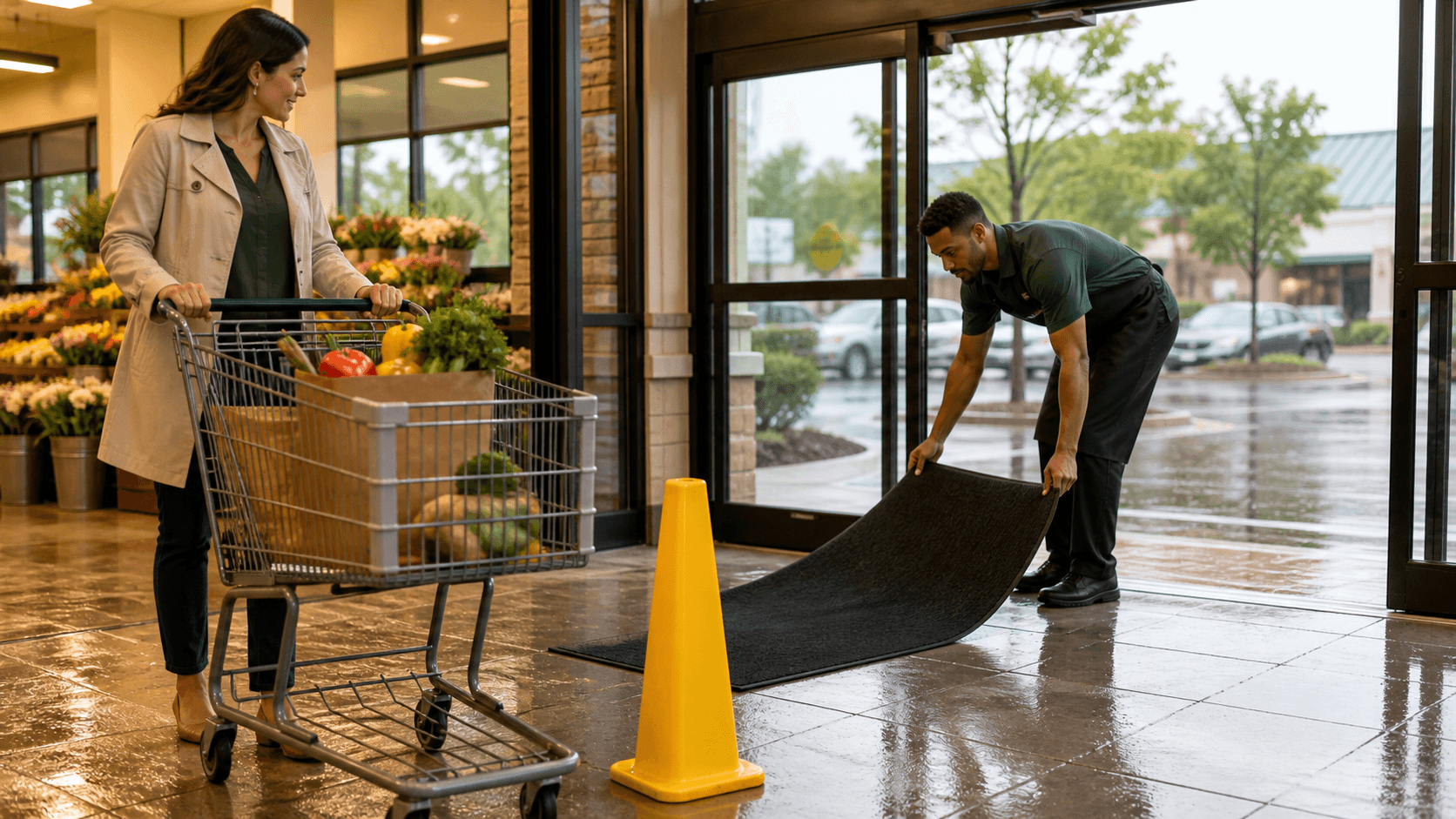
- Placing wet floor cones and warning signs in the right spots
- Using proper entry mats and changing them when they are soaked
- Keeping parking lots, ramps, and walkways in good repair
A few key questions often decide whether a store may be held responsible:
- Did the store know, or should it have known, about the unsafe condition?
- Was the hazard there long enough that a careful store would have taken action?
- Were the safety steps that were taken obviously not enough, given the weather?
North Carolina also follows a strict contributory negligence rule. If an injured person is found even slightly at fault, that can bar financial recovery. Casual comments like "I should have watched where I was going" can be twisted and used against you. It is very important to be careful about what you say to insurance adjusters and other parties.
Steps to Take Immediately After a Weather-Related Fall
Your health comes first. If you fall in a store, get medical help as soon as you can. Some injuries, like concussions, back injuries, or soft tissue damage, may not hurt much at first but can get worse over time.
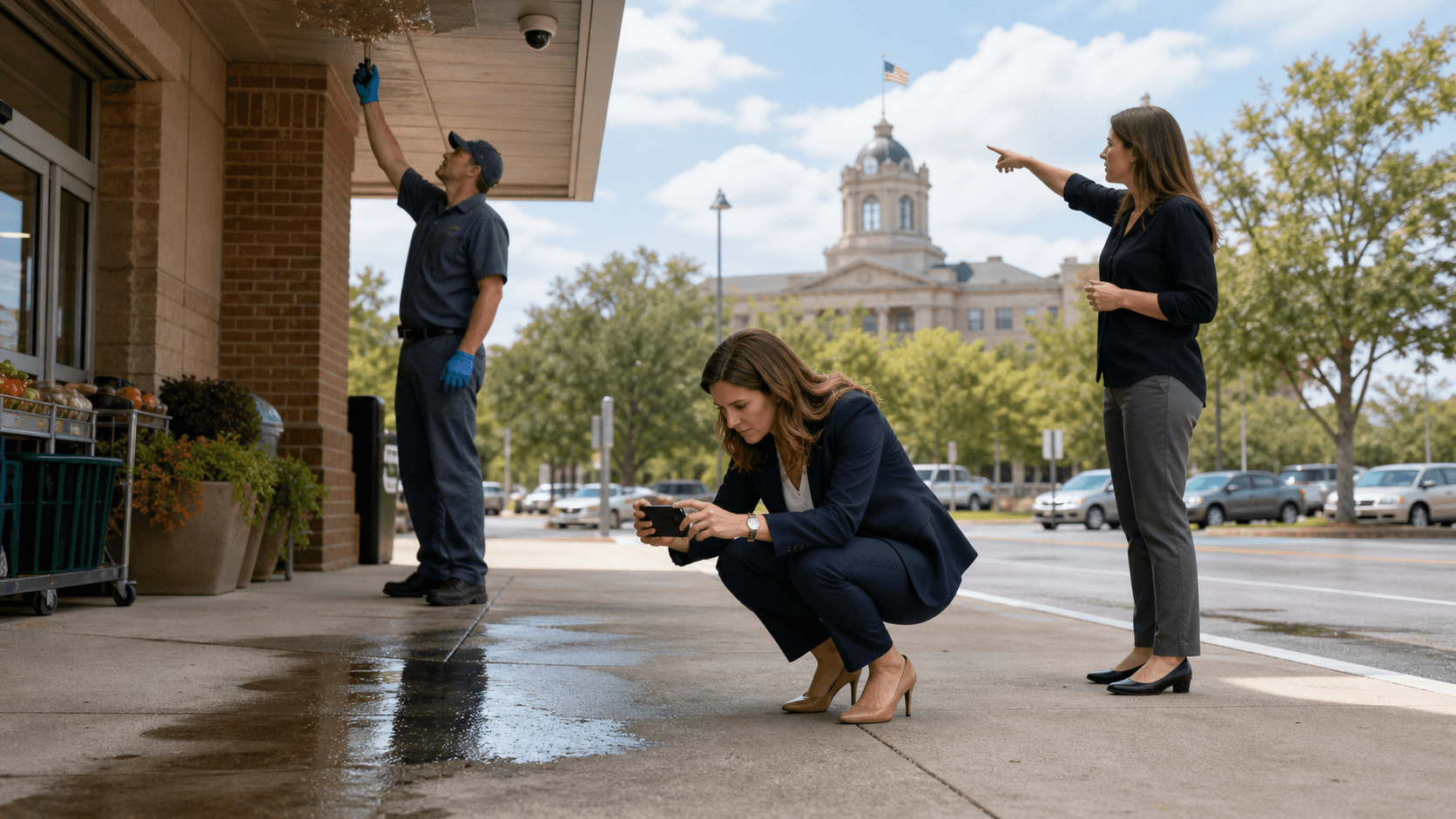
If you are able, or if a friend or family member can help, try to gather some basic evidence before the scene changes:
- Take clear photos or video of where you fell, including any puddles, wet spots, mats, steps, or lighting issues
- Step outside and snap photos of the weather conditions at the time
- Note the date, time, and what the weather was like, for example, rainy, windy, foggy, or icy
- Look for warning signs, cones, or barriers, and photograph whether they were in place
It is also smart to:
- Get names and contact information for witnesses who saw the fall or the hazard
- Ask for the names of employees who came to the scene or talked with you
- Report the incident to a manager before leaving if you can safely do so
When an incident report is filled out, make sure your version of what happened is accurately recorded. Ask for a copy if possible, or at least the report number or some way to identify it later.
There are some common mistakes that can hurt a claim:
- Posting details or photos on social media
- Giving a recorded statement to an insurance company without legal advice
- Telling staff or doctors that you are "fine" if you are in pain or unsure
Your words can be taken out of context later, so be honest but cautious.
How a Slip and Fall Lawyer in Jacksonville, NC Can Help
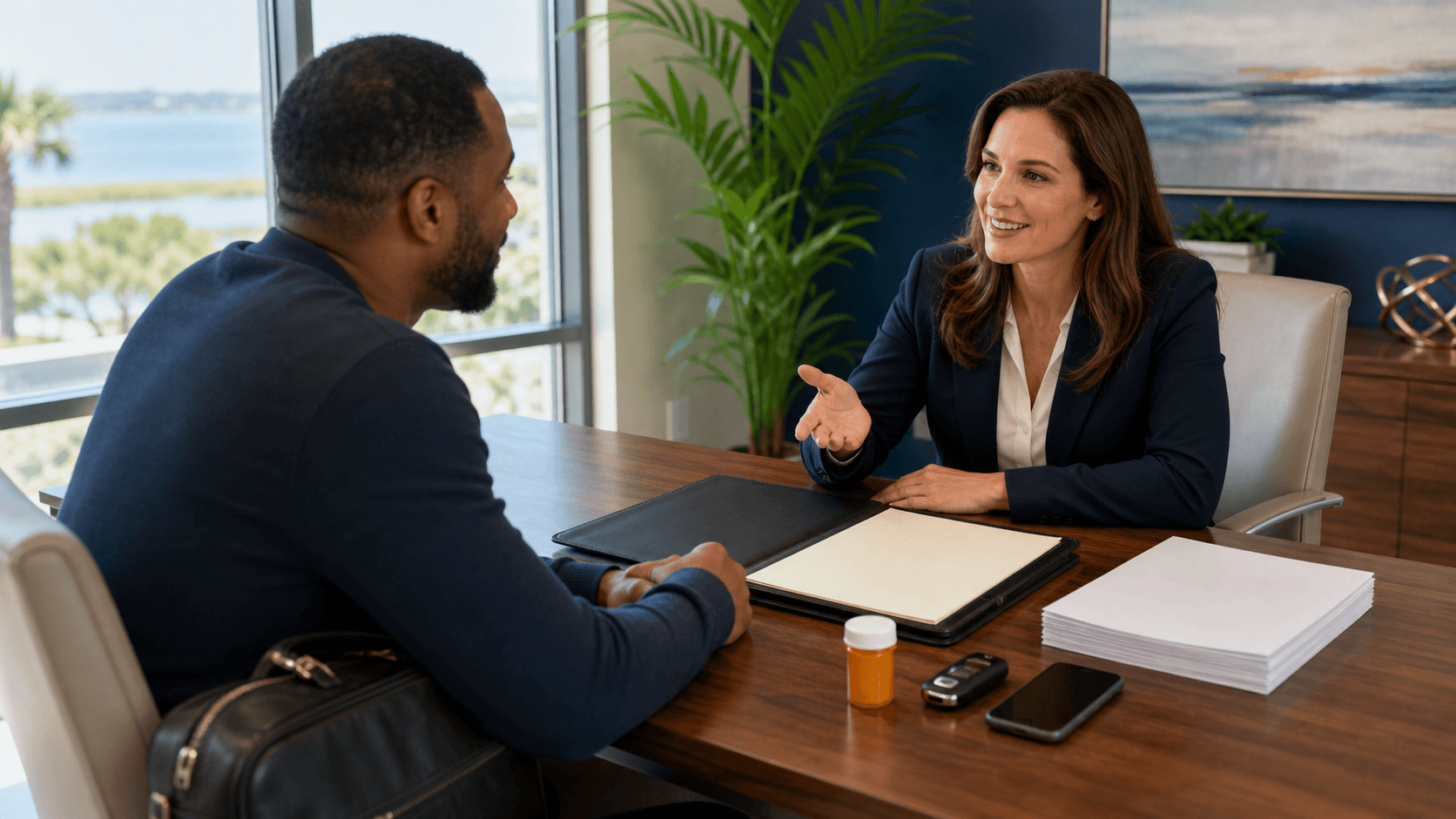
Weather-related slip and fall cases often turn on the details. An experienced slip and fall lawyer in Jacksonville, NC can take steps to protect important evidence before it disappears.
A lawyer can:
- Send requests to preserve surveillance footage before it is erased
- Seek maintenance, inspection, and cleaning logs from the store or property owner
- Identify every possible responsible party, such as the store, the landlord, or outside maintenance companies
- Look at weather records and compare them with store policies and actions
When thinking about the value of a claim, a lawyer will look at more than just the first medical bill. The full picture can include:
- Emergency care, follow-up visits, and physical therapy
- Future medical needs related to the injury
- Lost wages and reduced ability to work
- Pain and suffering, including long-term discomfort
- Scarring, disability, or limits on everyday activities
Because North Carolina uses contributory negligence, it is especially important to build a strong record of what the store did or failed to do. A lawyer can gather witness statements, consult with experts when needed, and answer arguments that the hazard was "open and obvious" or that you were not careful enough. Preparing a case as if it may need to go to court can often help during settlement talks.
King Law Firm handles personal injury matters on a contingency fee basis, which means injured clients do not pay attorney fees unless we recover compensation.
Deadlines and Evidence Rules That Can Make or Break Your Case
Slip-and-fall claims in North Carolina must be filed within specific time limits set by law. If you wait too long, you can lose your right to bring a claim, even if your case is otherwise strong. Special, shorter deadlines may apply if a government entity is involved, such as a fall in a public building or on government property.
Weather-related evidence is short-lived. Wet floors dry. Snow and ice melt. Leaves get swept away. Stores may record over surveillance video after a short period of time. This is why fast action to document the scene and get legal help can make a big difference.
Medical documentation is also important. To connect your injuries to the fall, it helps to:
- See a doctor promptly
- Follow the treatment plan that is recommended
- Keep all follow-up appointments
- Save bills, records, and any work notes or restrictions
Do not assume that the store's internal report or investigation will protect your interests. Those reports are created by the business, and they may leave out details that help you. Independent evidence and support from a legal team can provide a clearer, more complete picture of what really happened.
Take Control After a Fall in a Jacksonville Store
A weather-related fall can turn a normal day into a stressful one in seconds. While you are trying to manage pain, doctor visits, and the impact on your work and family life, dealing with a store, property owner, or insurance company can feel overwhelming. You do not have to handle all of that on your own.
By acting quickly, you can protect your rights. Get the medical care you need, document the scene and conditions if you can, report the incident, and be careful about what you say to others. Speaking with a knowledgeable slip and fall lawyer in Jacksonville, NC early can help you understand your options under North Carolina law and pursue fair compensation after a fall in a Jacksonville store.
Get The Legal Support You Need After A Slip And Fall Injury
If you were hurt in a fall on someone else's property, you do not have to navigate the medical bills, insurance calls, and legal details alone. At King Law Firm, we can explain your options, investigate what happened, and pursue the compensation you deserve. Talk with an experienced slip and fall lawyer in Jacksonville, NC so we can start protecting your rights right away. To schedule a free consultation, simply contact us today.