Wet Floors, Hurt Customers, and Costly Claim Denials
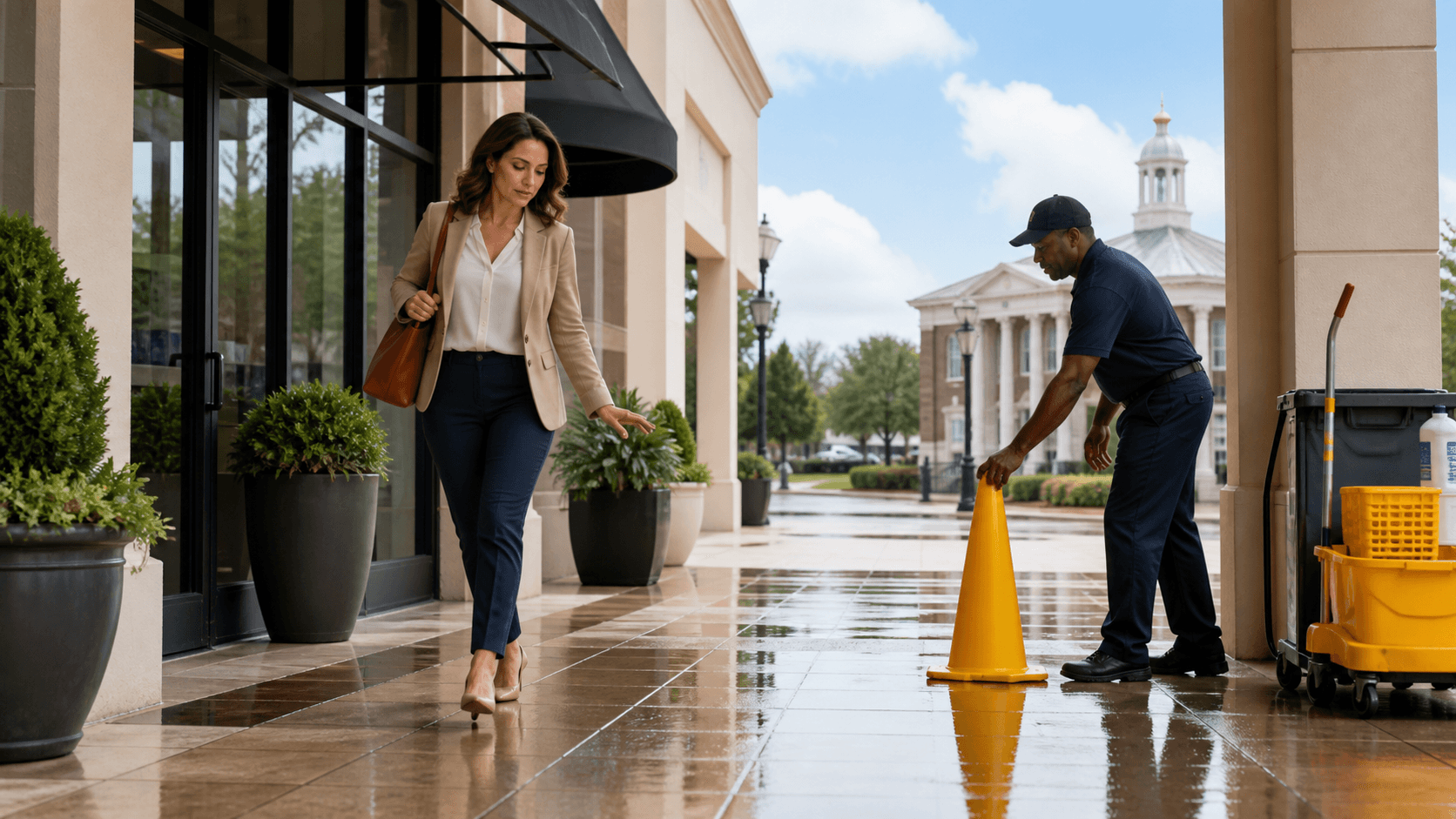
Slip and fall accidents on wet store floors are very common in Jacksonville. Afternoon thunderstorms, heavy rain, and crowded back-to-school aisles often mean water and spills near store doors and checkout lines. A quick trip for groceries or supplies can turn into a painful fall in just a few seconds.
Many people who get hurt in these situations think the store will automatically pay for their medical bills. They are surprised when the insurance company pushes back or flat out denies the claim. That shock is often followed by stress, lost income, and growing pain.
We see this happen again and again. When you understand why these claims fail, you can protect yourself, protect your case, and work better with a slip and fall lawyer in Jacksonville, NC if you decide to get legal help.
What North Carolina Law Requires After a Wet Floor Fall
Under North Carolina premises liability law, stores must use reasonable care to keep their property safe for customers. That includes:
- Keeping aisles, walkways, and entrances reasonably dry
- Inspecting floors on a regular basis
- Cleaning up spills in a timely way
- Using warning signs or cones when a floor is wet
Reasonable care does not mean the store must prevent every accident. But it does mean they should act like a careful business would under similar conditions, especially when they know rain and tracked-in water are common.
On top of that, North Carolina follows a strict rule called contributory negligence. This law says that if the injured person is found even 1 percent at fault, they can be completely barred from any recovery. There is no simple split of blame.
That rule gives insurance companies a powerful tool. They often try to argue that the shopper:
- Was not watching where they were going
- Ignored a sign or cone
- Wore unsafe shoes for the conditions
If they can convince a jury or judge that you share any tiny piece of fault, your claim can fail. This is one big reason slip and fall cases are especially tough in Jacksonville.
Common Store Defenses That Kill Valid Claims
Stores and their insurance carriers use a few standard arguments to avoid paying slip and fall claims, even when customers are badly hurt.
One favorite is the "open and obvious" defense. Here, the store argues that the water, mop streaks, warning cone, or wet entrance mats were so easy to see that any reasonable person would have avoided them. They say that because the danger was visible, they are not responsible for what happened.
Another common defense is "no notice." In these cases, the store says:
- They did not know about the spill or puddle
- The water appeared just moments before the fall
- They did not have a reasonable chance to discover and fix the problem
If the store can show that the hazard was very new, they may avoid liability.
The third major strategy is blaming the customer. Insurers often claim that the shopper:
- Was hurrying to catch a sale or get through the checkout line
- Was looking down at a phone
- Chose shoes with smooth soles, high heels, or no traction
- Carried large bags that blocked their view
Any of these points can be twisted into an argument that the customer "should have been more careful," which feeds into contributory negligence.
Evidence Shoppers Overlook in Wet Floor Accidents
Right after a fall, people are usually embarrassed and in pain. Many just want to get up and leave. That is understandable, but key evidence can disappear in minutes.
Helpful proof can include:
- Photos showing the exact condition of the floor
- Pictures of the liquid, streaks, footprints, or dirty water trails
- Lack of warning signs or cones in the area
- Soaked or bunched up entry mats that are not catching water
Witnesses are also very important. Other shoppers or employees might have seen:
- The puddle on the floor before your fall
- Staff mopping without any signs
- People slipping in the same spot earlier
Asking for names and phone numbers can make a big difference later.
Video is another key piece. Many Jacksonville stores use cameras. It can help to ask calmly if there are cameras that might have captured the fall or the floor conditions in the minutes before it.
Finally, it helps to:
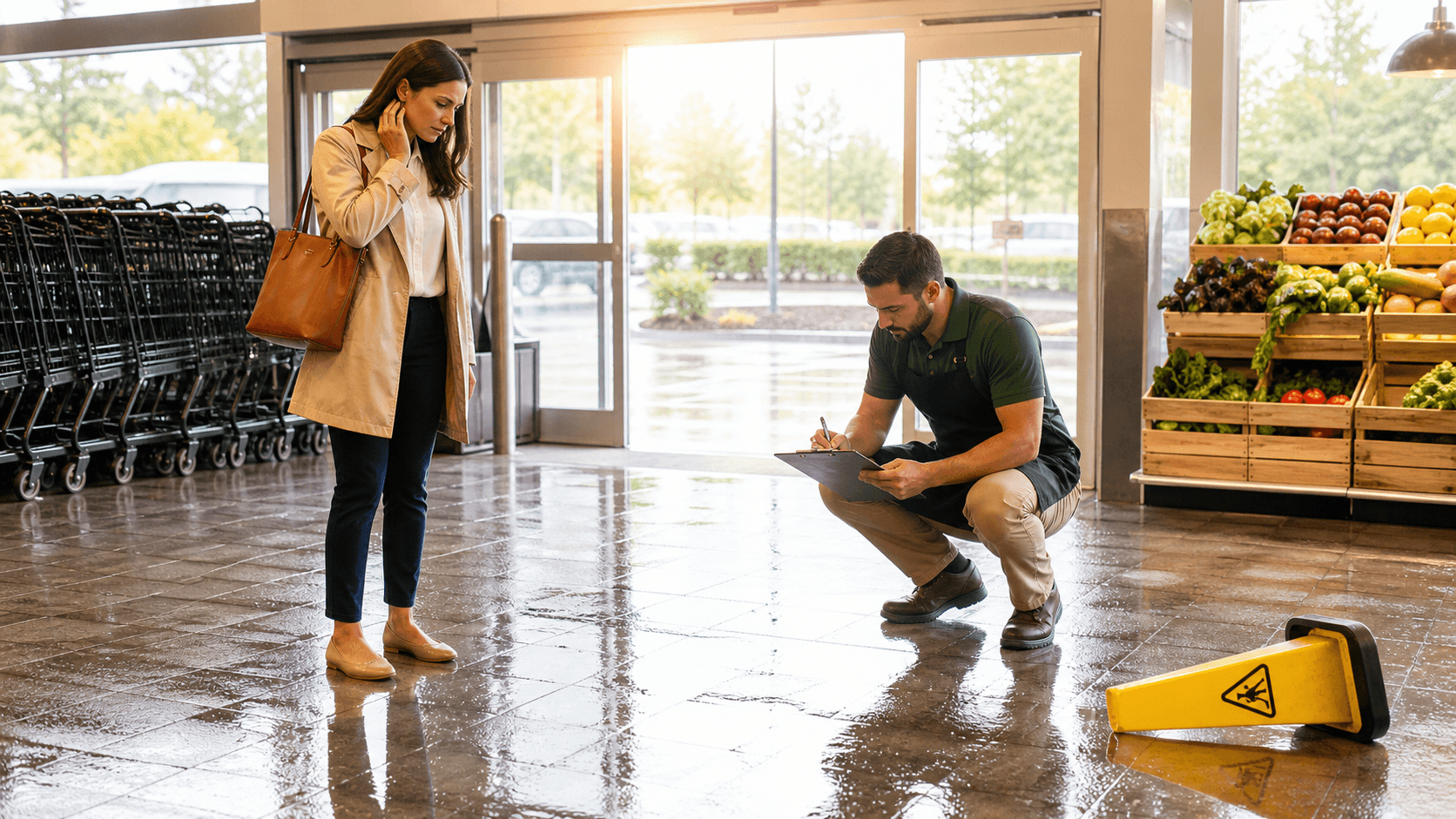
- Report the incident to a manager right away
- Ask for an incident report and request a copy if possible
- Keep the shoes and clothing you wore, do not wash or throw them away
- Get medical care quickly and follow up as recommended
All of this builds a clearer picture of what actually happened.
Mistakes That Make Jacksonville Slip and Fall Cases Unwinnable
Certain choices after a fall can badly hurt a claim, even when the store was careless.
Delaying medical care is one of the biggest problems. When someone waits days or weeks to see a doctor, the insurer often argues the injuries are:
- Not serious
- Caused by something else
- Made worse by the delay
Gaps in treatment give them room to question your pain and your story.
Another issue is giving a recorded statement to the insurance company without legal help. Adjusters are trained to ask questions in ways that:
- Make you sound unsure of what happened
- Suggest you saw the water and walked through it anyway
- Focus on your shoes, phone use, or speed
Even honest, polite answers can be twisted later.
Social media can hurt a case too. Posts that seem innocent, like a quick beach trip or a picture lifting a child, can be used out of context. Insurers may argue that if you can do that activity, your pain and limits are not as bad as you report.
How a Slip and Fall Lawyer in Jacksonville, NC Builds Proof
A slip and fall lawyer in Jacksonville, NC focuses on gathering the right proof before it disappears. Stores do not always keep video or cleaning records for long. An attorney can move quickly to request:
- Store video from all relevant cameras
- Maintenance logs and cleaning schedules
- Sweep sheets or inspection checklists
- Weather and rainfall information for that date
In some cases, safety experts can review the scene and explain how the floor, lighting, or cleaning methods created a hazard. Medical experts can connect the fall to the injuries and explain how those injuries affect work and daily life.
Because of contributory negligence, a key part of the job is showing that the injured person acted reasonably. That might include:
- Showing the water was hard to see from the customer's angle
- Explaining that the shopper was walking at a normal speed
- Pointing out poor lighting or distractions created by the store layout
- Proving there were no clear warnings in place
The goal is to counter the blame shift and keep the focus on the store's responsibilities and choices.
Protect Your Rights After a Wet Floor Fall in Jacksonville
If you are hurt on a wet store floor, a simple step-by-step approach can help protect your health and your claim:
- Report the fall to a manager right away
- Ask that the area be checked and an incident report created
- Take photos or videos of the floor, signs, and your injuries if you can
- Get names and contact information for witnesses
- Seek medical care as soon as possible and follow your doctor's advice
- Keep your shoes and clothing in a safe place
- Avoid long talks or recorded statements with insurance adjusters
At King Law Firm, we know how confusing and stressful a sudden fall can be. Wet floor cases in Jacksonville are not easy, especially with North Carolina's contributory negligence rule. Careful steps in those first hours and days can make the difference between a denied claim and a fair result that helps with medical bills, lost income, and long-term pain.
Protect Your Rights After a Slip and Fall Injury
If you were hurt in a slip and fall, you do not have to figure out your next steps alone. At King Law Firm, we will review what happened, explain your options, and fight to recover the compensation you deserve. Reach out to our experienced slip and fall lawyer in Jacksonville, NC for a free consultation today. You can also contact us to schedule a time that works best for you.