A deer collision can leave a motorcyclist badly hurt, even when no other driver is involved. Your health comes first. If you can move out of traffic without making your injuries worse, do so, call 911, and seek medical care before worrying about photos, insurance forms, or the motorcycle itself.
Documentation still matters in a single-vehicle motorcycle crash. Clear evidence may help show that a deer entered the roadway without warning, that you were riding responsibly, and that the crash caused particular injuries and damage. We recommend preserving what you can once the scene is safe.
Make the Crash Scene Safer First
Before collecting evidence, look for immediate dangers. A motorcycle down in a travel lane, loose debris, poor lighting, and passing traffic can turn one crash into another. If moving your motorcycle is unsafe, wait for law enforcement or emergency responders. If it is safe and your motorcycle has hazard lights, turn them on.
We suggest calling 911 when a deer collision involves injuries, major motorcycle damage, road debris, or an animal carcass. A responding officer may prepare a crash report that records the location, road conditions, visible damage, witness information, and your account of the event.
When speaking with responders, keep your explanation factual. Avoid guessing about your speed, braking distance, or whether you "could have" done something differently. Explain what you know, including:
- Your direction of travel and the route you were taking
- Where the deer appeared and how it moved into the road
- The weather, lighting, and traffic conditions
- Your braking or evasive actions, if any
- What happened immediately after the impact
If the deer is still near the roadway, keep your distance. An injured animal can react unpredictably, and law enforcement or animal control can handle the situation more safely.
Capture Evidence That Explains What Happened
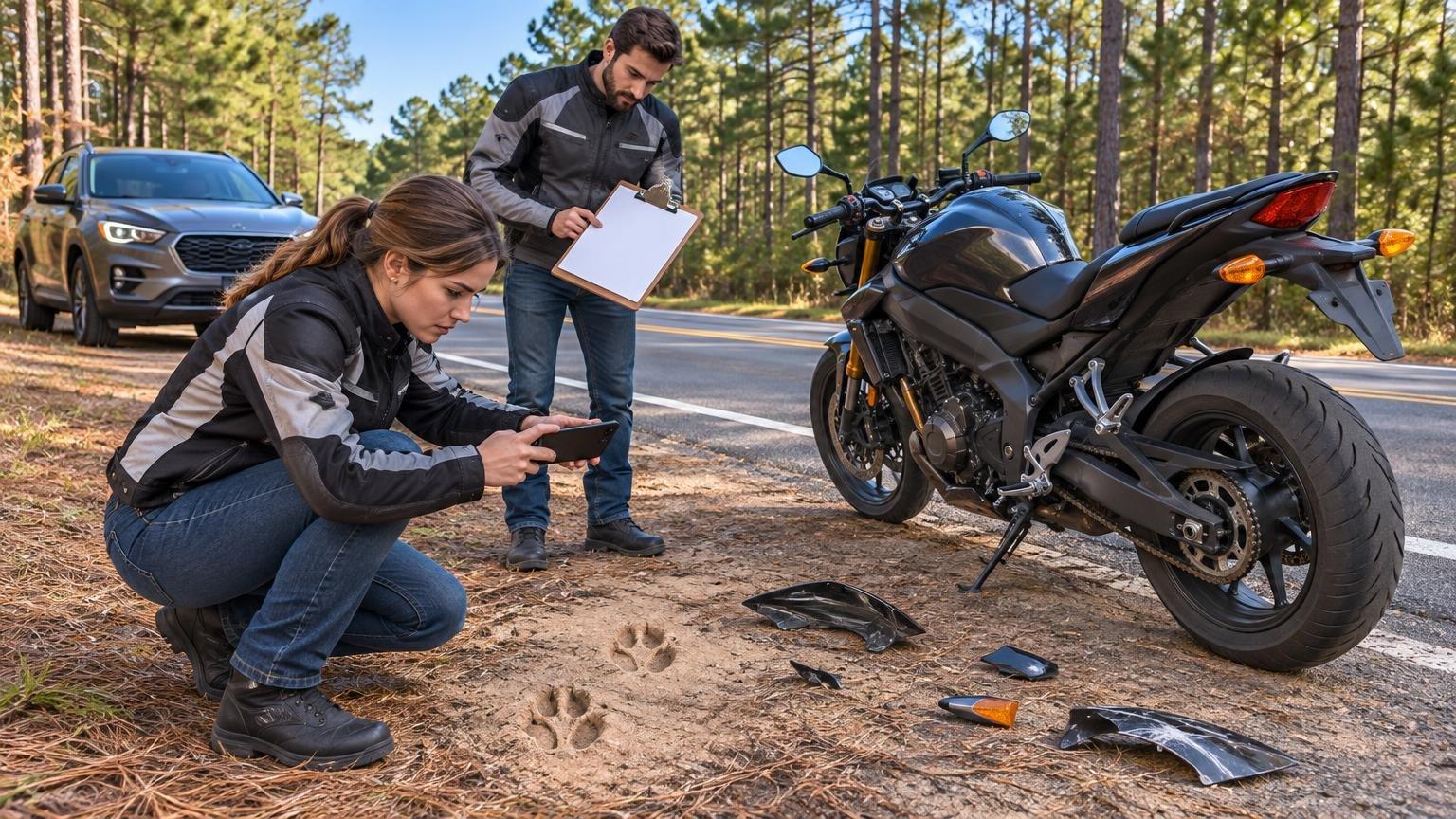
Once you are in a safe location and have received appropriate care, photos and video can help preserve details that may disappear quickly. Take wide shots of the overall area, then closer images of the motorcycle and damaged gear. Do not repair, clean, or throw away damaged items until you understand what may be needed for an insurance claim.
Useful photos may include:
- The motorcycle from several angles, including close-ups of impact damage
- Your helmet, jacket, gloves, boots, and other damaged protective gear
- Skid marks, debris, lane markings, road shoulders, and traffic signs
- The deer, if visible and safe to photograph from a distance
- Trees, curves, hills, roadside vegetation, and lighting conditions
A slow video of the entire area can preserve context that still photographs may miss. It may show limited sightlines, a sharp curve, a hill, or heavy vegetation near the road. Save helmet camera, motorcycle camera, dash camera, or phone footage in its original form. Avoid editing it or posting it online while the claim is still being reviewed.
As soon as you are able, make a voice memo or write down what you remember. Traumatic events can blur together quickly. Include the time, route, weather, direction of travel, estimated speed, where the deer came from, your reaction, and the sequence of events after impact.
Secure Reports and Other Independent Records
The official crash report can become a useful starting point when an insurer asks how the collision occurred. Ask the responding officer how to request a copy, then read it carefully when it becomes available. Flag factual errors involving the date, location, weather, motorcycle damage, or description of the deer's movement.
Witnesses can also make a difference. Someone may have seen the deer enter the roadway, watched you brake, or noticed a condition that made the crash harder to avoid. If possible, collect names, phone numbers, and email addresses before leaving the scene.
We also encourage riders to preserve records that are separate from their own account. Depending on the location, those records may include 911 call logs, dispatch information, towing invoices, roadside assistance records, weather reports, and nearby surveillance or traffic camera footage. Video can be overwritten quickly, so early preservation can matter, especially if a roadway condition may have played a part in the crash.
Keep a Careful Record of Injuries and Losses
Some motorcycle crash injuries are not obvious right away. Soreness, a headache, or stiffness can become more serious concerns over the following days. We recommend prompt medical evaluation after a deer collision, particularly if you hit the ground, struck an object, or experienced any blow to the head.
Create one recovery file for paperwork and photos. Keeping everything together can make it easier to track what the collision has cost you over time. Your file may include medical records, bills, prescriptions, treatment plans, repair estimates, towing and storage invoices, replacement gear receipts, and proof of missed work or reduced income.
A simple recovery journal can help document the day-to-day effects that bills do not always show. Note pain levels, sleep problems, mobility limits, emotional strain, missed family activities, and problems completing job duties. Preserve damaged gear as well. A cracked helmet or torn riding jacket may help show the force and nature of the impact.
Why Deer Collisions Can Be a Concern in Fayetteville
Deer can appear on the road at any time, but Fayetteville riders may notice increased activity during fall breeding season and early winter. Dawn and dusk, wooded roads, rural routes, and areas near Fort Liberty may call for added attention because a deer can enter a rider's path with little warning.
Even a crash with no other vehicle involved can raise complicated insurance questions. An insurance company may question whether a deer was present, challenge the severity of the damage, or review whether certain coverage applies. A motorcycle accident lawyer in Fayetteville, NC, can review the available evidence when the circumstances of a deer collision are disputed.
Preserve Evidence Before It Disappears
When a deer collision causes serious injuries, lost income, disputed coverage, or a fatality, early legal guidance may help protect records and witness accounts. At King Law Firm, we can review insurance policies that may include uninsured or underinsured motorist coverage, medical payments coverage, and other possible sources of compensation. We have represented North Carolina injury victims for more than 30 years and handle qualifying personal injury matters on a contingency-fee basis.
The most helpful step is to protect your health, report the crash, and save accurate records as soon as you can. Photos, medical documentation, damaged gear, witness details, and unedited video can all provide a clearer picture of what happened after a deer suddenly entered the road.
Get Clear Guidance After a Deer Collision
King Law Firm can help you understand your options and pursue the compensation available for your injuries and losses. Speak with a motorcycle accident lawyer in Fayetteville, NC who can review the circumstances of your crash and explain the next steps. If you are ready to discuss your case, contact us for a consultation.