Rainy days in Jacksonville can turn a quick store run into a serious problem. When water collects at store entrances, floors can become slick in seconds. Even careful shoppers can lose their footing, fall hard, and walk away with injuries that change their daily lives.
We want you to understand that these accidents are not always just bad luck. North Carolina law gives you rights when a store does not take reasonable steps to keep its entrance and aisles safe during wet weather. We will walk through why these falls happen, what your rights are, what to do after a fall, and how a slip and fall lawyer in Jacksonville, NC can help protect you.
When Rainy Weather Turns Storefronts Into Hazards
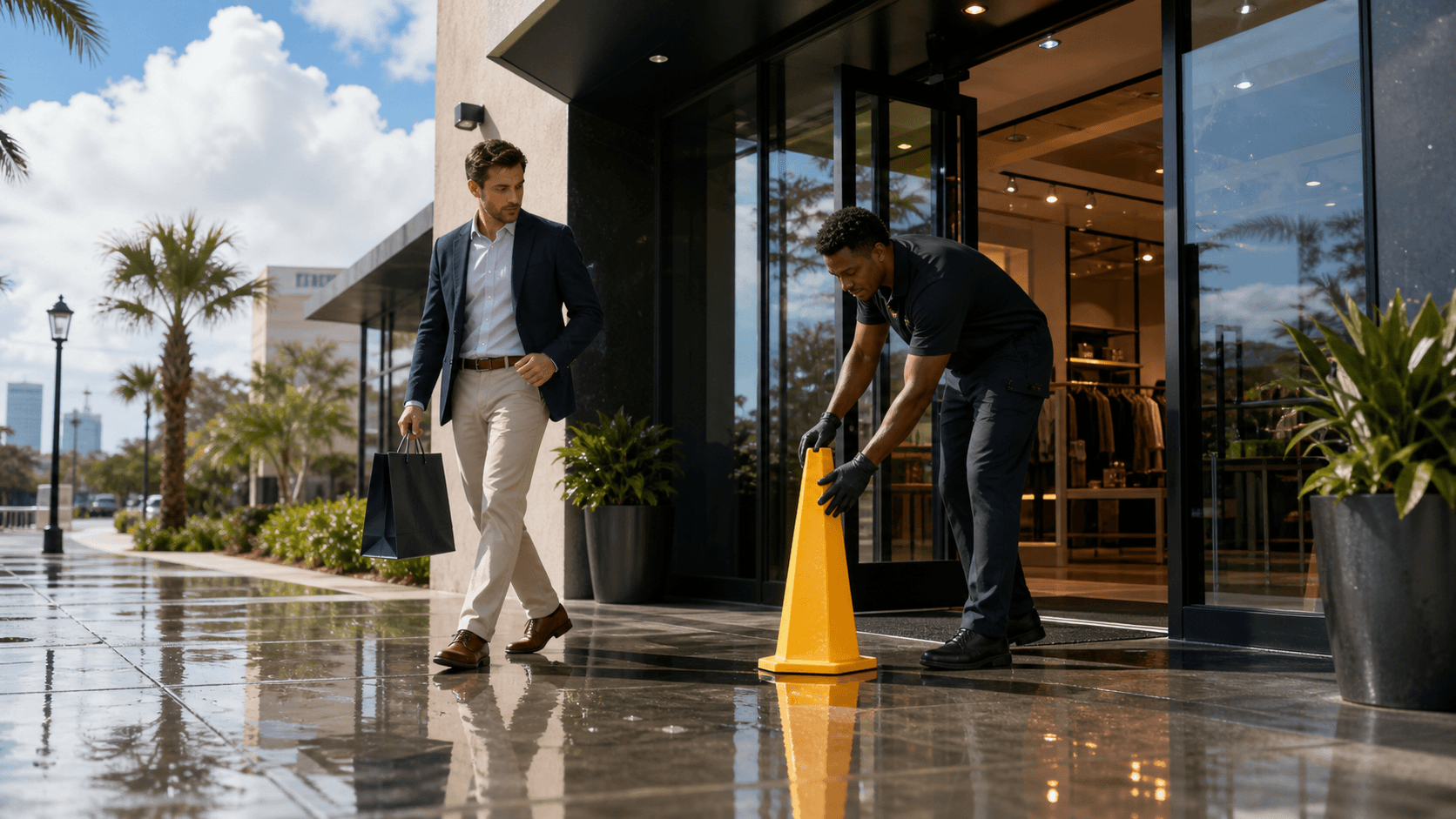
On a rainy fall day in Jacksonville, shoppers move in and out of grocery stores, pharmacies, and big-box retailers. Water drips from umbrellas, coats, and shopping carts. Each person brings more moisture inside. Tile, polished concrete, and other smooth floors can become slick quickly.
Even if you:
- Wearing good shoes
- Walking slowly
- Pushing a cart for balance
- Watching where you step
you can still hit a wet spot and go down. These rain-soaked storefront conditions are common, and stores know they happen during wet weather.
North Carolina law expects property owners and store operators to use reasonable care to keep their spaces safe. That duty does not stop when the weather is bad. A store cannot control the rain, but it can control how it handles the water that comes inside. When those steps are missing or careless, and someone gets hurt, a slip and fall lawyer in Jacksonville, NC can help sort out whether the store's conduct was negligent.
Why Wet Store Entrances Are So Dangerous
Rainwater does not just stay at the door. It can spread and pool in ways that are hard to see. Puddles in the parking lot can drip off carts. Poorly designed entryways can let water flow inside instead of draining away. Once that water hits smooth floors, it can create an almost invisible hazard.
Some common risk factors include:
- No floor mats, or mats that are thin, curled, or soaked
- No warning signs near wet areas
- Crowded entrances where people bump into each other
- Carts, displays, or clutter too close to the door
- Low lighting that makes wet spots hard to notice
- Sloped or uneven flooring that lets water collect in certain spots
When your foot suddenly slips, the force can send you to the ground fast. Typical injuries from these falls can be serious, such as:
- Broken wrists or arms from trying to catch yourself
- Hip or leg fractures, especially in older adults
- Concussions or other head injuries from striking the floor
- Neck or spinal injuries
- Torn ligaments in knees, ankles, or shoulders
Even a fall that seems minor at first can lead to ongoing pain, doctor visits, therapy, and time away from work. That is why it is important not to brush it off or assume you will just "walk it off."
Your Rights After a Store Slip and Fall in Jacksonville
Under North Carolina premises liability law, stores that open their doors to the public must use reasonable care to keep the property safe for lawful visitors. Rainy days do not cancel that responsibility. In fact, when the weather is bad, hazards are more predictable, and stores should plan for them.
To pursue compensation, an injured person usually needs to show at least one of the following:
- The store or its employees created the dangerous condition
- The store actually knew about the hazard and did not fix it or warn customers
- The hazard existed long enough that the store should have known about it and taken reasonable steps to address it
North Carolina also follows a strict rule called contributory negligence. If an insurance company or a jury believes you were even slightly at fault for your own fall, your claim can be put at risk. For example, the store might argue that you were distracted, walking too fast, or ignoring signs. Because of this rule, working with an experienced slip and fall lawyer in Jacksonville, NC can be very important. A lawyer can review the facts and push back against unfair blame.
What to Do Immediately After a Rainy Day Fall
Your health comes first. After a fall, try to:
- Stay still if you feel sharp pain in your head, neck, back, or hip
- Ask someone nearby to get a manager or call for help
- Seek medical care as soon as possible, even if you feel "mostly okay"
Some injuries, like concussions or soft-tissue damage, may not show full symptoms right away. Early evaluation creates a record that connects your injuries to the fall.
To help protect a possible claim:
- Report the incident to store management right away
- Ask for a written incident report and request to review it for accuracy
- Get names and contact information for any witnesses
- Take photos or video of the scene, including wet spots, mats, and warning signs or the lack of them
At home, try to preserve evidence:
- Keep the shoes and clothing you wore, and do not wash or throw them away
- Save all medical records, prescriptions, and bills
- Write down your pain, sleep problems, and how the injury affects your daily life and job
These steps can make it easier for a lawyer to understand what happened and build your case.
How a Jacksonville Slip and Fall Lawyer Can Help You
Handling a slip and fall claim on your own can feel stressful, especially while you are trying to heal. A slip and fall lawyer in Jacksonville, NC can help by:
- Requesting and reviewing store surveillance footage
- Getting incident reports, cleaning logs, and maintenance records
- Interviewing employees and witnesses about what they saw and what the store usually does in bad weather
- Working with safety or engineering experts when needed
Insurance companies often try to downplay injuries or suggest that a fall was your fault. An attorney can:
- Communicate with the insurance company on your behalf
- Collect medical records and other proof of your injuries
- Work to reach a fair settlement that may include medical expenses, lost wages, and pain and suffering
Having a local Jacksonville lawyer matters. Local attorneys know the stores, the common weather patterns in Onslow County, and how local courts view these cases under North Carolina's contributory negligence rules.
Protect Yourself Before You Shop in Stormy Weather
There is no way to make shopping in the rain completely risk-free, but small choices can lower your chances of falling. Before you head out on a wet day, consider:
- Wearing shoes with good grip on the soles
- Walking slowly as you enter and exit the store
- Using handrails where they are available
- Shaking off umbrellas and carts outside when possible
Inside, watch for warning signs like:
- No mats or tiny mats that do not cover the walking path
- Visibly wet or muddy spots with no cones or signs
- Employees stepping around spills instead of cleaning them
- Caution signs placed where people cannot easily see them
If an entrance looks unsafe, it might be better to use another door if possible or take extra care. Still, your caution does not cancel the store's legal duties. Even when shoppers are careful and alert, businesses must take reasonable steps to handle predictable wet-weather hazards.
Take Control After a Rain-Soaked Storefront Fall
After a rainy day fall, it is easy to feel embarrassed or to blame yourself, especially if you got up quickly and tried to brush it off. Try not to do that. If you are hurt, focus on getting medical care, telling your doctor exactly what happened, and following the treatment plan.
It is also wise to document the scene, save your shoes and clothes, and be careful about talking with insurance adjusters. Giving a detailed recorded statement before you speak with an attorney can sometimes hurt your case later. A slip and fall lawyer in Jacksonville, NC can review what happened, explain your options, and help you understand whether your fall may have been caused by a store's negligence under North Carolina law.
Protect Your Rights After A Slip And Fall Injury
If you were hurt in a fall on someone else's property, you should not have to navigate medical bills and insurance companies alone. At King Law Firm, we can review what happened, explain your legal options, and fight for the compensation you deserve. Speak with an experienced slip and fall lawyer in Jacksonville, NC who understands how to build a strong claim from the start. To schedule a free consultation, simply contact us today.